ontrack lab
Field notes & experiments.
The running data we collect, turned into things you can read, play with and scroll through. Some pieces you interact with; some you just read. More arrive over time.
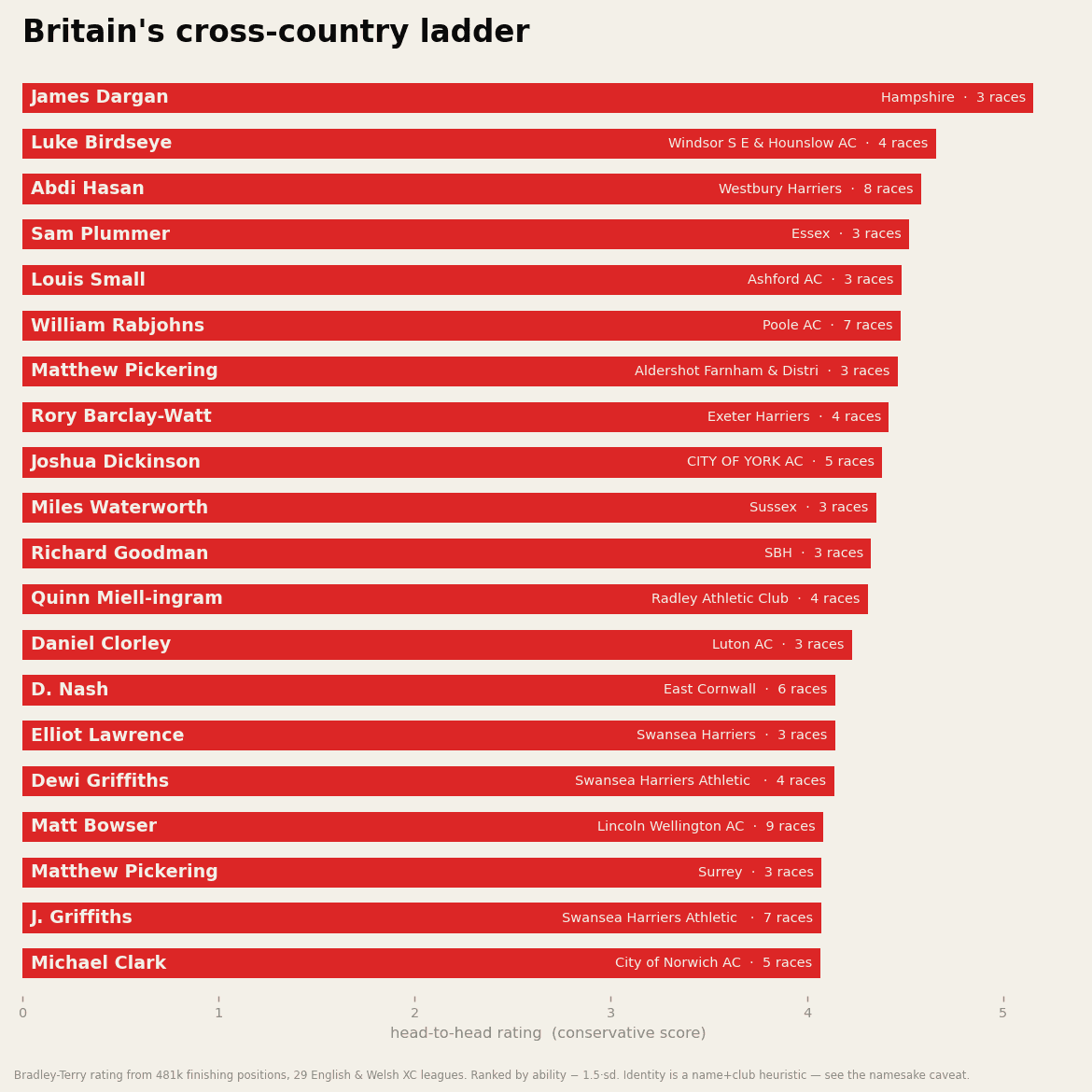
Who'd win? Rating British cross-country from finishing order alone
In cross-country the clock is meaningless — different course, distance and mud every week — so the only thing that carries is who beat whom. We took 481,000 finishing positions from 29 English and Welsh leagues and built one head-to-head rating, so we can ask "would A finish ahead of B?" even for two runners who never raced each other, and "who was the best in the country in 2023?".
Why ONTRACK is moving to Rust, Swift and Kotlin
A smaller backend and native apps should make ONTRACK simpler and cheaper to run as it grows.
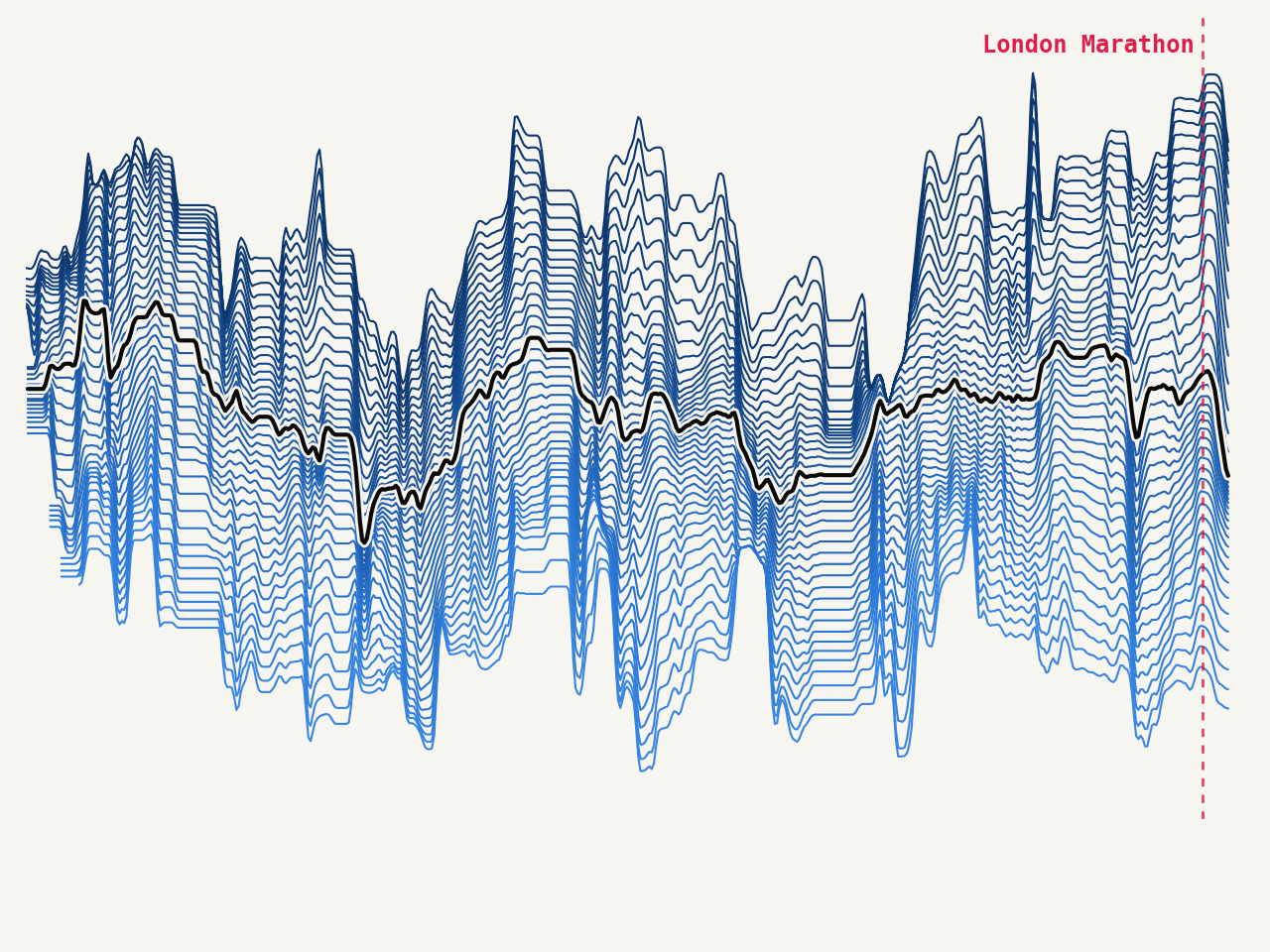
Metres per beat: the number that caught my overtraining
How far you run per heartbeat, adjusted for the hills, is a decent gauge of aerobic fitness. I computed it from a decade of my own Garmin files. It climbed for months into the London Marathon, then fell for five weeks afterwards while I kept training. That fall was overtraining, and it was in the data before I felt it in my legs.
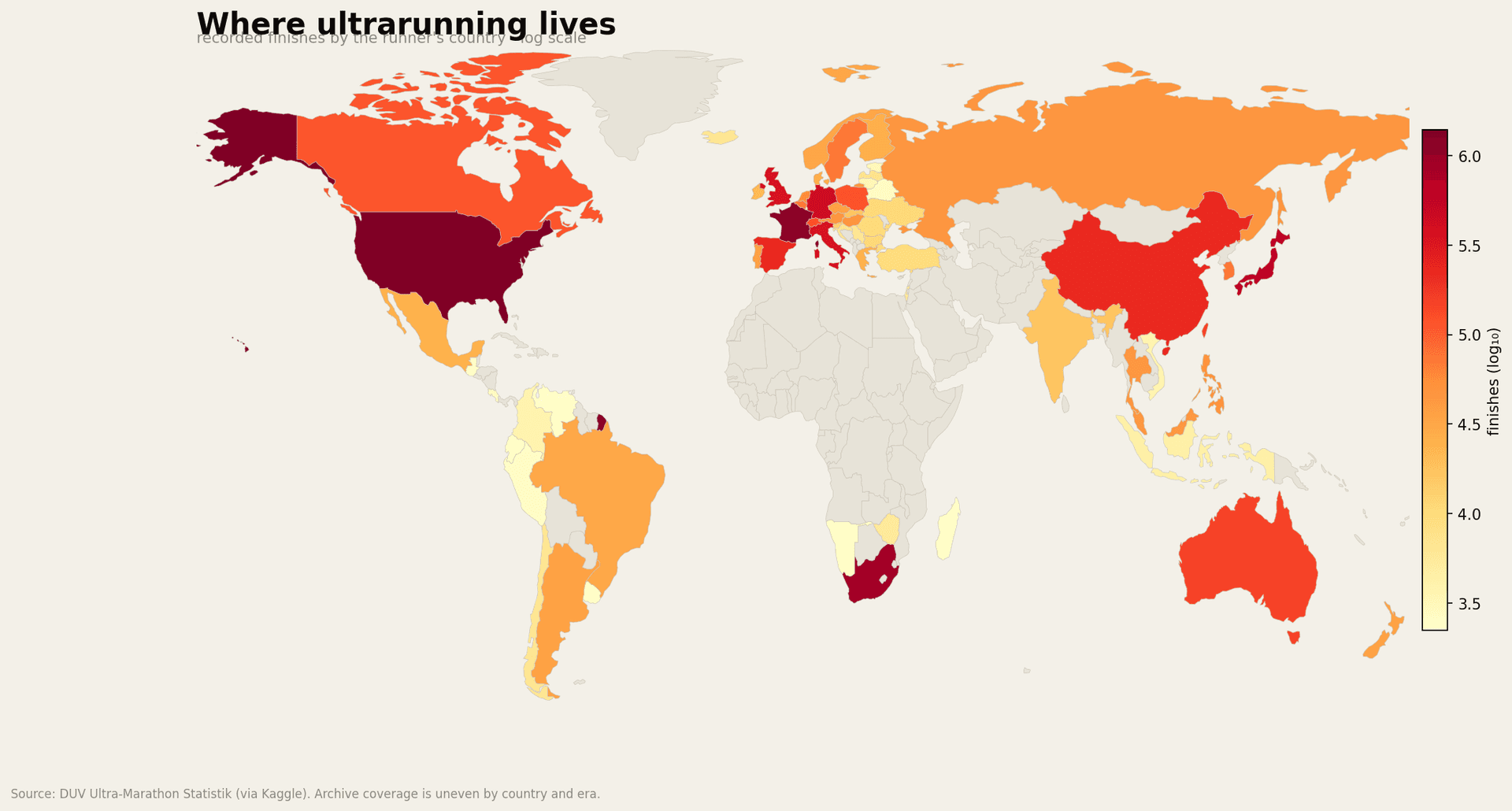
An atlas of ultrarunning
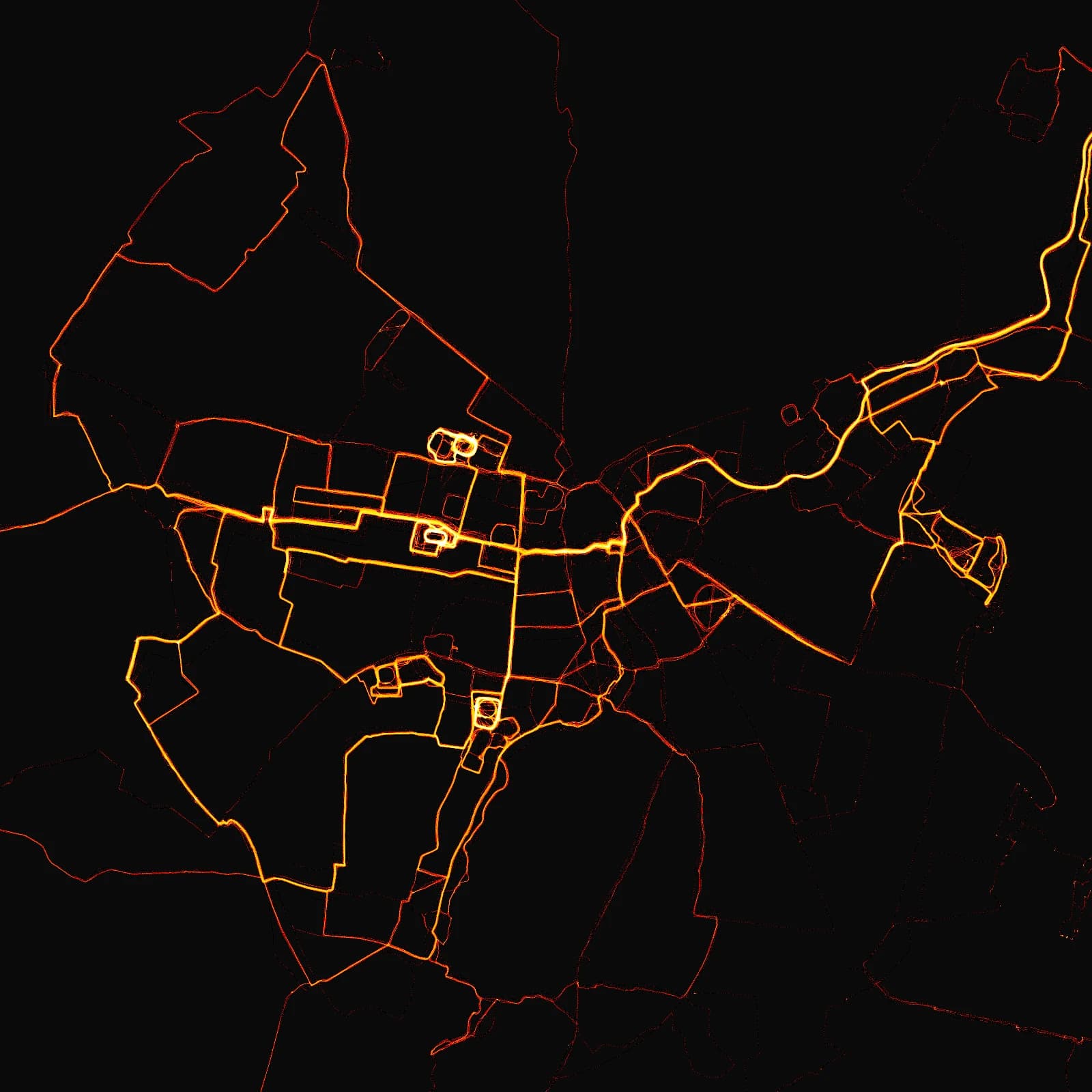
Where the sport lives, where it's fastest, and how a fringe pursuit became a global phenomenon — mapped across six decades and 27,000 races.
When do ultrarunners actually peak?
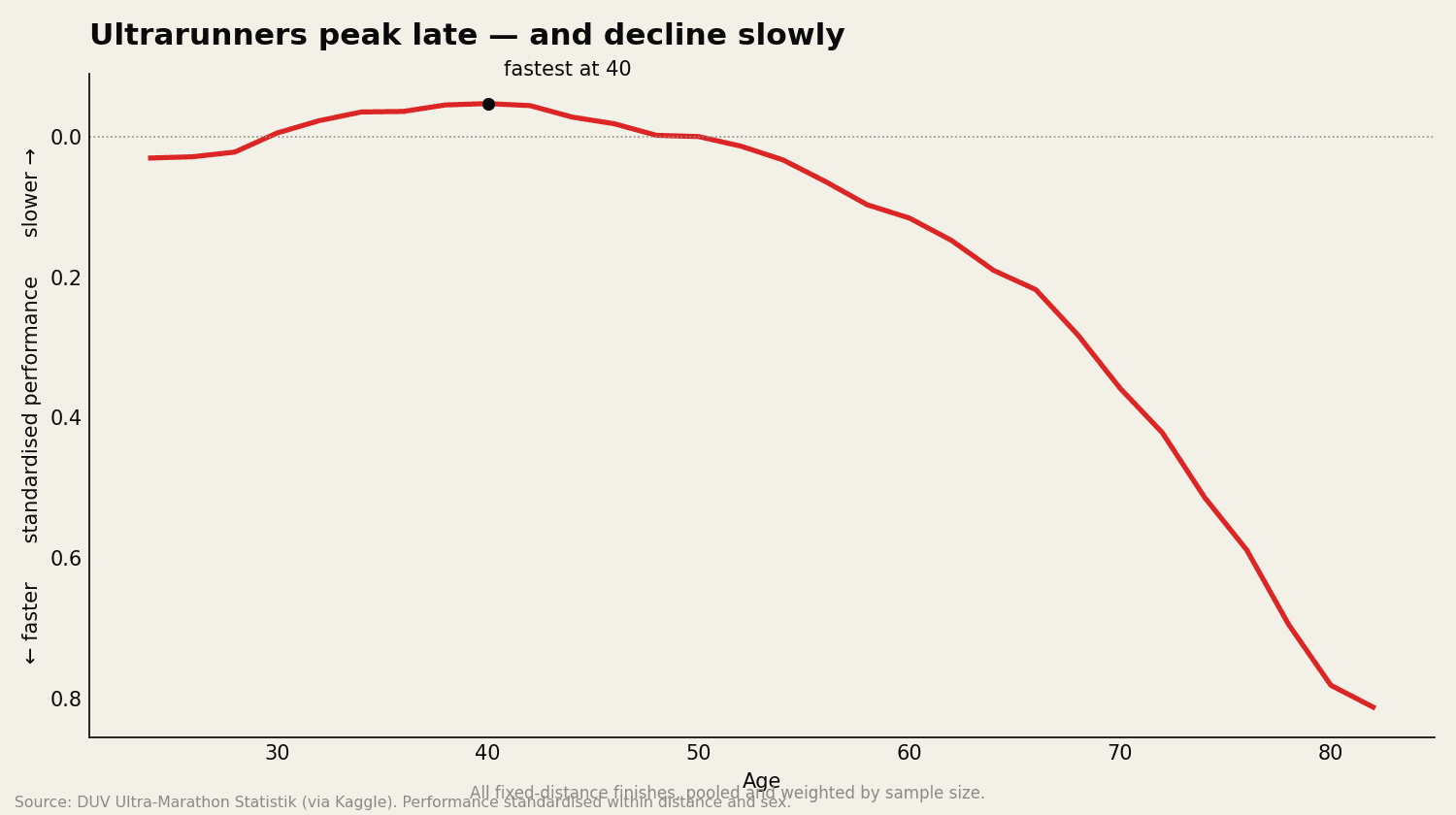
Across more than two and a half million ultra finishes, the age at which ultramarathoners are fastest is far later than the track would have you believe — right around 40 — and the decline past it stays shallow until about 60.
The world's fastest marathon courses
532,375 finisher results, 14 marathons, and the 38,539 runners who raced more than one, used to settle which courses actually make you fast, and which only look that way because fast people show up.
The world's hardest ultras
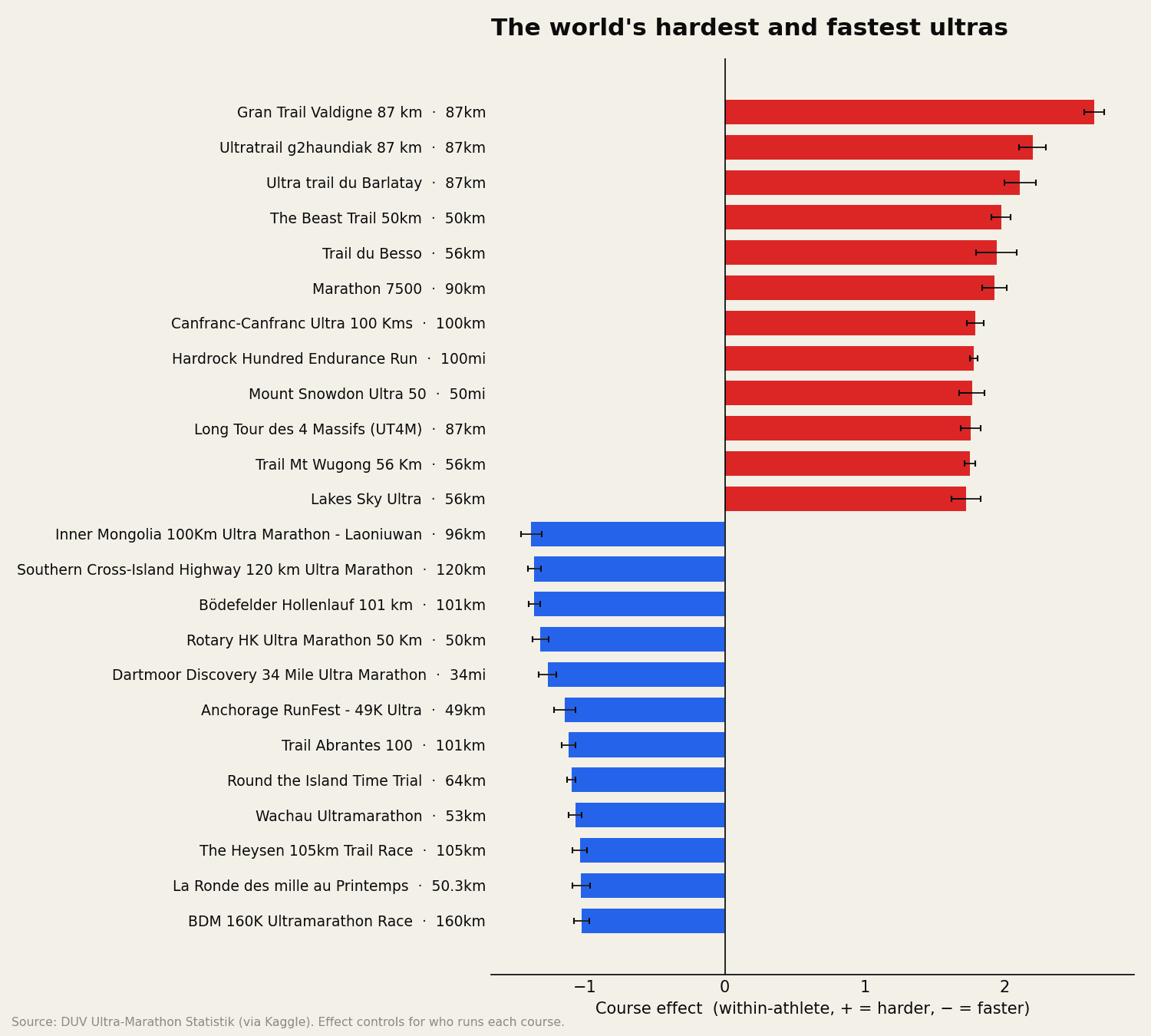
Using 6.8 million ultramarathon results, we separate a course's real difficulty from the runners who show up — and the famous monster, UTMB, turns out to sit in the middle of the pack, while Hardrock and a handful of savage sky-races top the list.
Britain's fastest tracks
Using every result on OpenTrack, we separate a track's genuine speed from the athletes who happen to race there. The venue matters most over distance, and the 10,000m shows how the method can be fooled.
Five million GPS points
Every GPS point my Garmin has recorded since 2014, drawn as the places I run, with a live view you can zoom all the way down to a single sample.